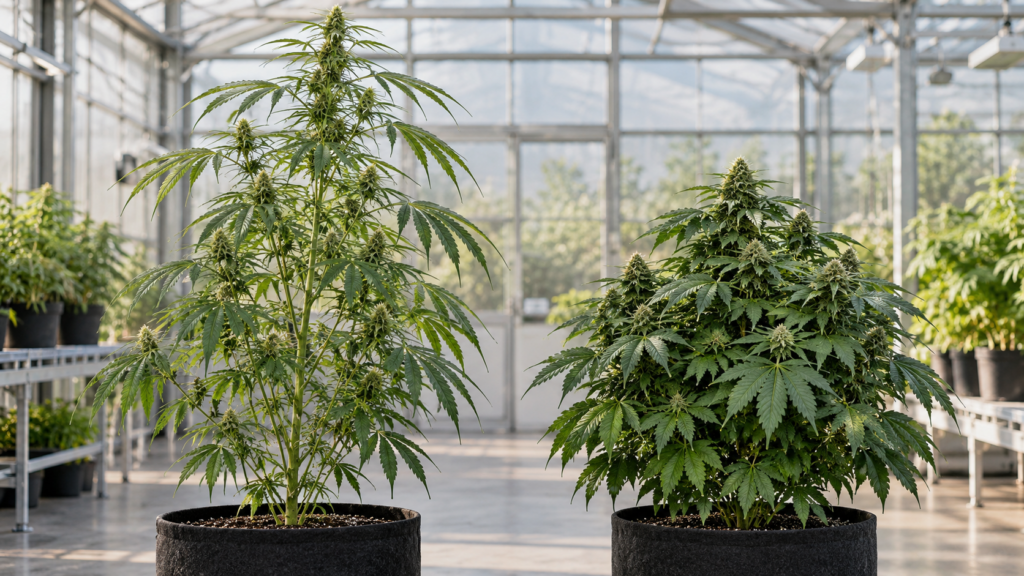
The Difference Between Indica and Sativa Explained
The difference between indica and sativa began with plant traits such as height, leaf shape, and growth pattern. Modern cannabis has been crossed many times, so store labels do not always show a clean genetic or chemical split. The name can guide a first question, but it cannot promise how a product will affect someone.
Key Takeaways
- Indica and sativa began as plant classification terms.
- Traditional plant traits include height, leaf width, and growth pattern.
- Modern crossbreeding makes many retail labels less exact.
- Measured label and lab facts are more useful for a specific product.
Where the Indica and Sativa Names Came From
The difference between indica and sativa starts with old plant descriptions. The name Cannabis sativa was used for cultivated cannabis. Cannabis indica was later used for plants linked to India. Plant experts have long debated whether these are separate species, subspecies, or groups within one very varied species.
Those names helped people talk about plants from different places. They also helped describe form and growth. The words were not created as a simple chart for mood, energy, or sleep. That retail use came much later.
Modern cannabis has a long history of travel, selection, and crossbreeding. A plant sold under one popular cultivar name may not have the same genetic line or chemical profile as a product with that name in another market. This history makes the difference between indica and sativa less clear on a store shelf. It also makes the difference between indica and sativa depend on the question being asked.
Traditional Plant Traits
Height and Shape
Plants called sativa have often been described as taller with more space between branches. Plants called indica have often been described as shorter and more compact. These broad traits can help a grower talk about plant form. They do not show the tested content of dried flower in a package.
Leaf Form
Sativa leaves are often shown with long, narrow leaflets. Indica leaves are often shown with wider leaflets. Real plants can show a mix of traits. Growing conditions can also change how a plant looks. One leaf photo is not a full genetic or chemical test.
Growth and Flowering
Traditional accounts link sativa plants with warmer regions and longer flowering times. Indica plants are often linked with cooler regions and shorter flowering times. This is one historic difference between indica and sativa. Growers may still use these patterns. Most adult shoppers, however, are comparing finished and packaged products rather than live plants.
Why Modern Products Blur the Difference
Crossbreeding is one reason the difference between indica and sativa can be hard to see. Growers combine plants to select traits such as aroma, growth, resin, color, or cannabinoid content. After many generations, a simple two-group family tree may not describe the product well. The difference between indica and sativa may look different when ancestry, plant form, or chemistry is the main test.
Names can also vary across growers and sellers. Two products may share a cultivar name but come from different plant lines or growing systems. Harvest, drying, storage, and processing can add more differences. A flower product and an extract with the same cultivar name are not the same product.
A peer-reviewed study of commercial products in the United States tested cannabinoids and terpenes. The researchers found that indica, sativa, and hybrid labels did not form three clean chemical groups. The labels had some links with certain aroma compounds, but they did not explain all chemical variation.
Botanical Difference and Expected Effects Are Not the Same
A plant can have a certain shape without causing one fixed human response. The effect of cannabis can change with THC amount, other cannabinoids, product ingredients, method of use, serving amount, other drugs, health factors, and past experience.
This is why the difference between indica and sativa should not be written as a guaranteed feeling. New York cannabis ads may not make medical or wellness claims. A retailer should not say that one label will treat anxiety, pain, sleep, or another condition.
The same care applies to words such as calming, active, focused, or sleepy. People may use these words to describe a personal experience. They should not be presented as a sure result for every adult who buys a product.
Use the Product Label as the Next Step
After reading a type label, find the product form. Flower, pre-rolls, vapes, edibles, and concentrates have different label needs. The difference between indica and sativa does not change those units. Check THC and CBD in the units used for that form. On an edible, read both the amount per serving and the total amount in the package.
Look for ingredients, warnings, net amount, processor details, and the lot or batch number. Then open the Certificate of Analysis through the package link or QR code. Match the product and batch. The OCM consumer guide explains these checks for New York adults.
Measured facts do not predict every response, but they describe the package more clearly than a broad plant group. The difference between indica and sativa can begin the talk. The label and CoA make the talk specific.
How Buzzwick Helps Adults Compare Products
Buzzwick lists flower, pre-rolls, vapes, edibles, and concentrates. Our team can show adults where to find the product form, cannabinoid panel, serving facts, and lab link. The difference between indica and sativa can guide a question, but we do not turn either tag into a health or effect promise.
Review the Buzzwick menu before your visit. Current stock and prices can change. Write down the product forms and label facts you want to compare. Bring valid government-issued photo ID showing you are 21 or older.
Buzzwick is listed by New York OCM at 4930 Broadway in Inwood. Adults should still look for the state storefront verification tool. Buy only from licensed sellers and keep legal products in their original child-resistant packages.
Responsible Use Still Matters
The difference between indica and sativa does not change basic safety steps. Do not drive or operate a machine after cannabis use. Plan travel before use. Keep cannabis locked away from children and pets. Avoid mixing cannabis with other substances because the combined response may be hard to predict.
If accidental use or overconsumption happens, call Poison Control at 1-800-222-1222. Call 911 for an emergency. Speak with a licensed health professional about medicine interactions, pregnancy, nursing, or a health condition. Cannabis bought in New York must not cross state lines.
Frequently Asked Questions
Are indica and sativa separate cannabis species?
Plant experts do not all use the names in the same way. Some treat them as species, subspecies, or broad groups within Cannabis sativa L. The debate is about plant classification. A retail label does not serve as a full genetic test, chemical report, or promise of a certain effect.
Can leaf shape prove that a product is indica or sativa?
No. Leaf shape can show a broad plant trait, but real plants may have mixed features. Growing conditions and plant ancestry also matter. A dried, processed product cannot be judged from a leaf drawing. Use the package identity, cannabinoid facts, batch number, and Certificate of Analysis for product details.
Why do dispensaries still use indica and sativa labels?
The labels are familiar and can help organize a menu. They give shoppers a simple place to start a question. Their limits should be clear. Adults should also compare product form, measured cannabinoids, serving facts, ingredients, warnings, and the lot-specific lab report before making a choice.
Which label should a first-time shopper choose?
There is no single label that is best for every first-time shopper. Start with the product form and read its measured content and serving information. Ask staff to explain label facts without making a fixed-effect promise. Plan safe travel, avoid driving after use, and store the product away from children and pets.
Read More Than the Type Name
Use the difference between indica and sativa to understand plant history, then use legal product facts to compare a real item. Visit Buzzwick in Inwood and let our team help you locate the label and CoA details.